Choosing a foundation shade online can feel like matching skin to a small digital square. Screens vary. Lighting lies. Undertones are easy to misread.
The opportunity is significant. McKinsey’s 2023 beauty market report forecasts the global beauty industry could reach approximately $580 billion by 2027. It also identifies online channels as a continuing growth engine. NIQ’s 2024 State of Beauty report similarly emphasizes more informed, omnichannel beauty shoppers. These findings explain why shade selection deserves more than a quick guess.
A poor match is visible around the jawline, hairline, and neck. Sometimes, it looks too orange under warm bathroom lights. Other times, a pale formula creates a gray cast beside the nose. I have made that mistake myself. Product photography cannot replace real skin observation.
This guide explains how to choose the right foundation shade online using practical, evidence-based checks. You will compare undertone, depth, formula finish, retailer swatches, and return policies. Small details matter.
Not every method works equally well. Brand shade systems differ, and online tools can produce inconsistent results. That limitation deserves honesty. Your best choice may require comparing two nearby shades rather than trusting one quiz.
The seven tips ahead combine professional color theory, manufacturer guidance, and real-world testing habits. They are designed for shoppers who want a closer match before opening the package. Better preparation reduces waste, improves confidence, and makes online beauty shopping more reliable.
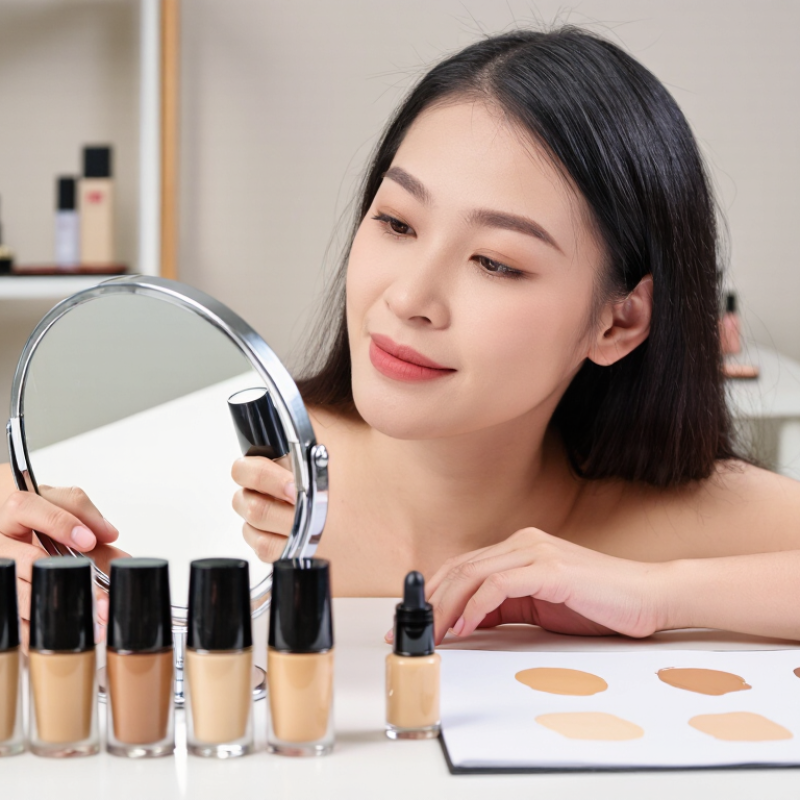
Identify Your Skin Undertone and Surface Tone
Choosing foundation online becomes easier when you separate undertone from surface tone. Undertone is the subtle color beneath your skin. It usually appears warm, cool, or neutral. Surface tone is your visible depth, such as fair, medium, tan, or deep. Your surface tone can change after sun exposure, but your undertone usually stays consistent.
Tip: Check your jawline in natural daylight. Compare it with your neck and chest, not your hand. Blue or purple veins may suggest a cool undertone. Greenish veins can suggest warmth. If both seem unclear, you may have a neutral undertone. This test is useful, but imperfect. Lighting changes everything.
Tip: Compare digital swatches with several references. A 2023 Circana report showed U.S. prestige beauty e-commerce sales grew strongly, proving that online shade selection is becoming more important. However, screens can distort color. Turn off night mode, reduce screen brightness, and avoid judging from influencer photos. Their lighting may be heavily adjusted.
Tip: Read shade descriptions carefully. Look for words such as golden, olive, rosy, neutral, or peach. McKinsey’s 2023 beauty market analysis projects the global beauty market could reach about $590 billion by 2030. More online choices also create more confusion. Use a retailer’s shade finder, then confirm with customer photos taken in daylight. If two shades seem close, choose the one matching your neck. A slightly imperfect match can often be adjusted with concealer or bronzer.
| Tip | What to Check | How to Identify It Online | Reliable Signs or Measurements | How to Apply the Result | Common Mistake to Avoid |
|---|---|---|---|---|---|
| 1 | Separate undertone from surface tone | Undertone is the subtle hue beneath the skin, while surface tone is the visible depth that may change with sun exposure, redness, or irritation. |
Undertone: cool
warm
neutral
olive Surface tone commonly ranges from very fair to very deep. |
Use undertone to narrow the shade family and surface tone to select the depth. Both must match for a natural result. | Choosing a shade only because it looks light or dark enough without considering its undertone. |
| 2 | Determine your undertone in natural light | View clean, makeup-free skin near a window during indirect daylight. Compare the neck, jawline, and inner wrist rather than relying on one small area. | Cool: pink, red, or bluish cast Warm: yellow, golden, or peach cast Neutral: balanced mix | Begin with shade descriptions labeled cool, warm, neutral, or olive when the seller provides those categories. | Judging undertone under colored indoor lighting, which can make skin appear more yellow, pink, or gray than it is. |
| 3 | Use several undertone clues together | Combine the appearance of veins, jewelry preference, and reaction to sun. No single clue is definitive for every person. | Blue or purple-looking veins may suggest cool undertones; green-looking veins may suggest warm undertones; a mix may suggest neutral. Silver and gold jewelry preferences can provide supporting clues only. | If clues conflict, treat yourself as neutral or compare neutral and olive options through a retailer's sample or return process. | Assuming vein color alone proves an undertone. Vein appearance is affected by skin depth, lighting, and surrounding colors. |
| 4 | Match the jawline, not the hand | The face and hands often differ in sun exposure and surface tone. The jawline provides a better transition between the face and neck. | Look for the shade that visually disappears across the jawline and blends evenly into the neck without a visible orange, pink, gray, or yellow edge. | When the face and neck differ slightly, prioritize a natural match along the jawline and consider using bronzer or blush for added warmth. | Matching foundation to the back of the hand, which may be darker or more exposed than the face. |
| 5 | Compare shades using digital tools carefully | Use online shade finders or comparison photos only as a starting point. Review images taken in neutral daylight and check whether the model's depth and undertone resemble yours. | Screen brightness, camera white balance, filters, and image editing can change how a shade appears. Shade names are not standardized across product ranges. | Shortlist two or three nearby shades, especially one slightly lighter and one slightly deeper, before ordering when samples are unavailable. | Assuming a shade number or name has the same meaning across different formulas or product lines. |
| 6 | Allow for oxidation and formula changes | Some foundations appear darker or warmer after exposure to air and after mixing with skincare or natural facial oils. Results vary by formula and skin type. | Apply a small amount to the jawline, allow it to set for the product's recommended wear time, and compare it in daylight before deciding. | If the shade becomes noticeably darker or more orange, test a nearby lighter or less-warm option rather than applying a much thicker layer. | Making an immediate decision before the product has dried and settled on the skin. |
| 7 | Test the match in real conditions | Wear the foundation for several hours and inspect it in daylight, indoor light, and photographs. Check the center of the face, jawline, and neck. | A good match should blend without a sharp boundary and remain comfortable. Temporary redness, dryness, or oiliness can affect how the color appears. | Use the seller's return or sample policy when possible. Record the shade, undertone, formula, and lighting used for future online purchases. | Evaluating the color only under store-style lighting or immediately after application. |
Shade names are not universal. “Light neutral” may look deeper than “light beige” elsewhere. Compare depth, undertone, and finish.
Look for words like cool, warm, neutral, olive, rosy, golden, or peach. Treat them as clues, not guarantees.
Test a small amount along your jawline and neck. Wrist swatches can mislead you. The difference may look obvious there.
Use natural daylight near a window. Avoid yellow bathroom bulbs. Compare several photos, because one polished image can deceive you.
Wait about ten minutes. Some formulas oxidize and appear darker after drying. Check the shade again in daylight.
Yes. Matte, satin, and radiant finishes can reflect light differently. “Natural” may look satin on one person and matte on another.
Water-based formulas may feel lighter. Richer formulas can suit dry skin. Check the ingredient list if your skin feels sensitive.
Review the full shade chart, user photos, exchange deadlines, unopened-product rules, and return shipping costs. Save your order details.
Compare it beside your neck in daylight. Describe whether it looks too pink, yellow, deep, or pale. Contact support promptly.
No. Screens, filters, lighting, skincare, and seasonal changes affect color. I still choose incorrectly sometimes. Rechecking helps, but it remains an estimate.
Learning how to choose the right foundation shade online starts with understanding both your skin undertone and surface tone. Determine whether your undertone is warm, cool, or neutral, then consider your current complexion, including redness, tanning, or uneven areas. Since shade names and descriptions can vary between foundation brands, compare terms carefully instead of relying on labels alone. Online swatches, customer reviews, and shade-matching tools can offer useful guidance, especially when viewed on skin tones similar to yours.
Before making a purchase, check whether the displayed images were taken in natural or artificial lighting, and consider how the foundation’s finish and formula may affect its appearance. A matte formula may look different from a dewy one, while oxidation can slightly deepen the color after application. Whenever possible, test the foundation along your jawline in suitable lighting. Finally, review the seller’s exchange policy so you can easily replace the shade if your first selection is not quite right.

 Bremma Beauty